Friday, April 04, 2008

Intravenous Cord Blood Cells Rejuvenate Aging Brains, Replenish Neural Progenitor Cells

Researchers in Florida have managed to rejuvenate the brains of aging mice with a single injection of human cord blood cells in a peripheral vein. The single cord blood cell injection resulted in new progenitor stem cells in the mouse hippocampus, and new nerve cell formation.
Neurogenesis continues to occur throughout life but dramatically decreases with increasing age. This decrease is mostly related to a decline in proliferative activity as a result of an impoverishment of the microenvironment of the aged brain, including a reduction in trophic factors and increased inflammation.

We determined that human umbilical cord blood mononuclear cells (UCBMC) given peripherally, by an intravenous injection, could rejuvenate the proliferative activity of the aged neural stem/progenitor cells. This increase in proliferation lasted for at least 15 days after the delivery of the UCBMC. Along with the increase in proliferation following UCBMC treatment, an increase in neurogenesis was also found in the aged animals. The increase in neurogenesis as a result of UCBMC treatment seemed to be due to a decrease in inflammation, as a decrease in the number of activated microglia was found and this decrease correlated with the increase in neurogenesis.

The results demonstrate that a single intravenous injection of UCBMC in aged rats can significantly improve the microenvironment of the aged hippocampus and rejuvenate the aged neural stem/progenitor cells. Our results raise the possibility of a peripherally administered cell therapy as an effective approach to improve the microenvironment of the aged brain.

...Not only do the results of this study provide novel insight into the state of the aged stem cell niche, the ability of the UCBMC to exert their effects while being administered minimally invasively may make translation to the clinical setting more likely. For this reason it will be important in future studies to determine the most efficacious dose and dosing regimen. Nevertheless, this is the first time that a systemic injection of hematopoietic cells has been shown to restore the regenerative potential of the aged brain, providing a novel insight into how the regenerative potential of the aged stem cell niches could be restored.

...The effects of UCBMC have been attributed to changes in the microenvironment of the brain, through the release of trophic factors or by reducing inflammation, and not by a direct replacement of cells [21-23]. UCBMC contains a number of cell types including B-Cells and T-Cells, as well as, mesenchymal and endothelial progenitor cells. UCBMC is also a rich source of CD34+ hematopoietic stem cells [24-26]. It was recently demonstrated that a systemic injection of UCBMC cells could suppress inflammation in the brain following stroke. Moreover, the effects of UCBMC cells seemed to shift the cytokine expression from a Th1 response to a Th2 response [20,23,27]. In addition to the immune modulatory effects, UCBMC cells also produce a number of trophic factors including, but not limited to, VEGF, nerve growth factor, and cytokine colony stimulating factor-1, thrombopoietin, and IL11 [20,28,29]. ___BiomedCentral__via_madscience__via__TechnutNews

It is important to understand that the cells that were injected into the peripheral veins of mice were human umbilical cord blood mononuclear cells (HUCBMCs). The results are somewhat startling, given that the injected cells were not neural stem cells, the cells were not injected directly into the brain, and the cells were given in a single dose only. It will be important for the researchers to tease out the important cellular and trophic factors present in the UCBMC's that may have led to the rejuvenatory effects.

This is a line of research that I am interested in following further.

Labels: ,

Tuesday, April 01, 2008

Protecting the Brain Over the Lifespan

If humans are to extend their lifespan by 50% and more, they will need to learn to prevent accumulation of damage to the aging brain. One approach is through long-term pharmacological intervention.

Scientific work continues on the use of Ampakine drugs to treat Alzheimer's and other neurological disorders. Now it looks as if Ampakines can also serve as a prophylactic drug.
The drug, temporarily designated S18986, interacts with AMPA (short for α- Amino-3-hydroxy-5- methylisoxazole-4- propionic acid, or ampakine) receptors in the brain. These receptors transmit excitatory signals in the brain, and researchers were interested in experimental AMPA-receptor drugs (such as S18986) for their neuroprotective abilities and for the way they temporarily boost memory. But rather than investigating the compound’s short-term effects, Alfred E. Mirsky Professor Bruce McEwen and his lab members...studied the drug’s impacts on middle-aged to elderly rats and found that, when administered daily over four consecutive months, it appeared to improve memory and slow brain aging.

...When compared to control animals that had received only sugar water, the drugged rats were not only more active and better at memory tests, but their brains showed physical signs of slowed aging. Neurons in the forebrain that produce acetylcholine, a neurotransmitter known to play a role in learning and memory, had 37 percent less decline. Dopamine-producing neurons, which are responsible for sustaining activity and motivation levels, slowed their decline by 43 percent. Levels of inflammation in the brain were also significantly lower. “Every marker we chose to look at seemed to indicate there was some preservation of function during aging with chronic treatment,” Hunter says. The drug appears to slow aging’s effects throughout the entire brain.___ScienceDaily__via__FutureScanner

This particular Ampakine appears to have a protective effect on the brains of rats over a significant part of the rat's lifespan.

Ampakines are being researched as potential treatments for Alzheimer's, Depression, and other neuropathological and neuropsychiatric conditions. This research suggests an even broader potential application of Ampakines--as a neuroprotective for those at risk for neuropathology. Broadly speaking, that would be most of us, over our lifespans.

Labels: , , ,

Saturday, January 26, 2008

Replacement Body Parts

Since 1967, when Christiaan Barnard successfully performed the first successful human to human heart transplant, it has been painfully obvious that there are not enough human hearts available to meet the demand. Surgeons have tried various approaches to replacing damaged and worn out hearts--including baboon hearts, refrigerator sized machine replacement hearts, and most reacently, the AbioCor totally implantable artificial heart system. While the AbioCor's batteries can be rechared through the skin, they will eventually have to be replaced. Machine hearts are subject to failure of various types, and experience with them is still only short term.

Eventually, hearts will be "printed", along with other replacement organs. Other organs, such as the urinary bladder, have already been synthetically produced and implanted. But the heart's fibrous skeleton is too complex for scientists to mimic in the lab--to this point.

So lab scientists are learning how to scavenge heart skeletons wherever they can. University of Minnesota scientists have taken dead animal hearts and removed the dead cells--leaving the fibrous infrastructure. By injecting immature heart cells into the scaffolding--in a stepwise manner--they were able to revitalize the heart to the point of beating.
The team took a whole heart and removed cells from it. Then, with the resulting architecture, chambers, valves and the blood vessel structure intact, repopulated the structure with new cells.

"We just took nature's own building blocks to build a new organ," says Dr Harald Ott, a co-investigator who now works at Massachusetts General Hospital. "When we saw the first contractions we were speechless."

The work has huge implications: "The idea would be to develop transplantable blood vessels or whole organs that are made from your own cells," said Prof Doris Taylor, director of the Centre for Cardiovascular Repair, Minnesota, principal investigator.

The method could be used to grow liver, kidney, lung and pancreas, indeed virtually any organ with a blood supply.
Telegraph

In the meantime, researchers continue to work on alternatives--including artificial hearts that spin like a turbine, producing a constant blood pressure rather than a pulse. Such turbine hearts are said to be efficient in small sizes, making it easier to fit size constraints. Such hearts would still have the problem of requiring a power supply.

Rather than replacing the heart, methods of regenerating the existing heart are being developed. Techniques of injecting stem cells into the patient's heart have already produced positive results in some cases. Likewise, procedures that attach "sheets of muscle blasts" to the patient's heart have been successful in Japan. Clearly, it would be preferable if the patient's own heart can serve as a scaffold for cell replacement.

In several pathological processes, however, the underlying structure of the patient's heart has been rendered dysfunctional. Without extensive remodeling surgery, the heart's infrastructure has to be replaced.

In approaching heart replacement, patients, physicians, and families have to weigh the benefits and risks. With the rapid growth in viable choices for replacement, this process will necessarily become more detailed and informed.

Bioprinting organs, and other ways of regenerating or synthetically reproducing human organs, will be very expensive for a long time. That expense will push experimentation in different directions.

Originally published in Al Fin

Labels: ,

Wednesday, January 09, 2008

Mainstream Media Coverage of SENS

Most readers of Al Fin blog want to live long, happy, prosperous lives. Otherwise, why read this blog? I consider Aubrey de Grey's SENS program for radical life extension to be the best ongoing approach to significant improvement in human lifespan. Now the mainstream periodical, The Economist, takes a look at de Grey's regimen:
Dr de Grey, who is an independent researcher working in Cambridge, England, is a man who provokes strong opinions. He is undoubtedly a visionary, but many biologists think that his visions are not so much insights as mischievous mirages, for he believes that anti-ageing technology could come about in a future that many now alive might live to see.

Vision or mirage, Dr de Grey has defined the problem precisely. Unlike most workers in the field, he has an engineering background, and is thus ideally placed to look into the biological repair shop. As he sees things, ageing has seven components; deal with all seven, and you stop the process in its tracks. He refers to this approach as strategies for engineered negligible senescence (SENS).

The seven sisters that Dr de Grey wishes to slaughter with SENS are cell loss, apoptosis-resistance (the tendency of cells to refuse to die when they are supposed to), gene mutations in the cell nucleus, gene mutations in the mitochondria (the cell's power-packs), the accumulation of junk inside cells, the accumulation of junk outside cells and the accumulation of inappropriate chemical links in the material that supports cells.

It is quite a shopping list. But it does, at least, break the problem into manageable parts. It also suggests that multiple approaches to the question may be needed. Broadly, these are of two sorts: to manage the process of wear and tear to slow it down and mask its consequences, or to accept its inevitability and bring the body in for servicing at regular intervals to replace the worn-out parts.
Economist

The writers at The Economist seem to understand that the key to getting anywhere in science is to "break a problem into manageable parts". Then define hypotheses which are falsifiable. Then test your hypotheses, one by one.

Because this is the approach that de Grey and his program are taking--and since no one else has attempted anything else nearly so ambitious or logical--it is to de Grey, SENS, the Methuselah Foundation etc. that most interested parties look for advances in this area. Of course, breakthroughs can occur at unexpected times and places. The radar scope must still sweep a broad circle. But reading de Grey's book, Ending Aging, and following the progress of SENS, is a good place to start.

Hat tip Brian Wang

Labels: ,

Sunday, November 25, 2007

Aubrey de Grey's Ending Aging


I recently had the opportunity to read Aubrey de Grey's briskly selling book, Ending Aging.

The book goes into more detail about the 7 approaches to anti-senescence discussed at the SENS website. Consider a progress report on a very important front of scientific research. Arnold Kling takes an economist's look at the book, and is intrigued:
Four years ago, I reported that de Grey foresees a not-too-distant future in which humans can reverse the effects of aging, raising the possibility of living healthy lives for hundreds of years. He has not backed away from that position, and this book, written by de Grey and his research associate Michael Rae, represents an update from his perspective. In brief, he says that

1. The latest scientific research indicates no flaws in the theory that aging can be eradicated.

2. However, getting the required techniques developed will require institutional changes relative to our current system for conducting medical research.

As an economist, I am most interested--and most qualified to form an opinion about--the second point.

...De Grey sees aging as a byproduct of an evolutionary process that takes place within the body. Mutations occur over time within your cells, sometimes randomly and sometimes stimulated by external events. This evolutionary process changes the balance between what I might call "good stuff" and "bad stuff" (here I am taking the technical caliber of the scientific exposition down several levels). Sometimes, the "good stuff" gets stronger, as when we develop an immunity to a disease. More often, however, the "good stuff" gets weaker and the "bad stuff" (like arterial plaque or pre-cancerous cells) gets stronger. It is this shift in the balance that leads to the symptoms of aging, including susceptibility to disease, which ultimately proves fatal.

Because aging is a natural outcome of the body's internal evolutionary processes, de Grey argues that the standard paradigm for fighting the diseases of aging one by one is flawed. Prevention of one disease, in the form of slowing the processes that cause it, is a doomed strategy.

...Too often, academics use their credentials to spit out biased polemics dressed up as science. Ending Aging is the opposite. It is a crash course in state-of-the-art science dressed up as a polemic. De Grey wears his passion for undertaking a war on aging on his sleeve, yet most of the book consists of scientific analysis that, although simplified to enable a layman to follow, is conscientious in reporting doubts and objections to the author's point of view.

...What de Grey is saying is that today's cautious approach to experimental medical testing significantly slows the rate of progress, which means that many people will suffer and die unnecessarily. However, those people are unseen and unknown, whereas those who suffer and die as a result of medical experiments are identifiable and visible. I think that trying to sell people on the idea of taking more risks in order to advance medical progress is not as straightforward as de Grey makes it sound

...My guess is that de Grey will have better luck if he tries to mobilize wealthy philanthropists. If instead of donating buildings to universities our billionaires would donate money for prizes that reward general-purpose medical technologies, we might not have to wait for government research to adopt a paradigm shift, which is almost surely not going to happen. Wealthy (and not-so-wealthy) philanthropists who are reading this should check out de Grey's organization SENS and look for ways to contribute both to his institute and to a prize fund.
TCS

Future research will make part of de Grey's program moot and unnecessary. Other future research will likely incorporate some of de Grey's ideas. The point is, de Grey's approach is the best one currently operating, so that if someone did have extra money he/she was thinking about donating to science, they could do much worse than to donate to SENS.

I recommend the book to anyone interested in the extension of healthy human lifespan. Getting much of the same information from the SENS website + literature searches is possible, but you wouldn't want to miss Aubrey's unique argumentative style.

Labels: , , ,

Wednesday, September 26, 2007

SENS3 Conference etc.

SENS3, the third biannual SENS conference was held 6-10 Sept 2007 at Queens College, Cambridge. An excellent summary of the conference is available at Ouroborus. Apparently, progress has been made by several researchers on multiple fronts. To access talks from previous conferences, go to SENS1 here, or SENS2 here.

Aubrey de Grey's SENS is a seven-part approach to engineering increased longevity in humans. SENS research is being funded by the Methuselah Foundation, and other funding agencies and individuals.

Other important recent conferences of note were the Singularity Summit in San Francisco and the Nano-Bio technology Conference in Tucson. Both of those conferences were well covered by Michael Anissimov.

Hat tip Brian Wang

From Al Fin

Labels: ,

Wednesday, July 25, 2007

Virus vs. Cancer: Reolysin Reovirus in Multiple Human Trials

Viruses are hardy pre-lifeforms, that have played a major role in the evolution of humans and other animals and plants. The articles featured in this posting deal with the reovirus labeled Reolysin, by Canadian company Oncolytics.
The novel anti-cancer therapy, REOLYSIN®, is a living virus, not a chemotherapy drug, that is toxic to cancer cells but not harmful to normal cells. This novel therapy, using a living virus, is the first of its kind available at CTRC.

...“This novel therapy has shown success because the reovirus replicates in and destroys the cancer cells within the patient’s body,” said Mita. “Cancer cells have several molecular and genetic abnormalities. In normal, healthy cells, the reovirus is unable to reproduce because of an enzyme named PKR. The enzyme is suppressed in cancer cells, and therefore the reovirus can replicate in the cancer cell and kill it.”

“REOLYSIN® typifies the true targeted therapy approach that seeks to use fundamental differences between cancer and normal cells as the basis for effective anti-cancer approaches and we are thus very excited about the this study,” said Francis Giles, MD, director of the CTRC Institute for Drug Development.
From article discussing human trials of Reolysin for metastatic sarcomas to the lung.

Another trial is ongoing in the UK:
The trial (REO 010) has two components. The first is an open-label, dose-escalating, non-randomized study of REOLYSIN(R) given intravenously with docetaxel every three weeks. A standard dosage of docetaxel will be delivered with escalating dosages of REOLYSIN(R) intravenously. A maximum of three cohorts will be enrolled in the REOLYSIN(R) dose escalation portion. The second component of the trial will immediately follow and will include the enrolment of a further 12 patients at the maximum dosage of REOLYSIN(R) in combination with a standard dosage of docetaxel.

Eligible patients include those who have been diagnosed with advanced or metastatic solid tumours such as bladder, prostate, lung or upper gastro-intestinal cancers that are refractory (have not responded) to standard therapy or for which no curative standard therapy exists. The primary objective of the trial is to determine the Maximum Tolerated Dose (MTD), Dose-Limiting Toxicity (DLT), recommended dose and dosing schedule and safety profile of REOLYSIN(R) when administered in combination with docetaxel. Secondary objectives include the evaluation of immune response to the drug combination, the body's response to the drug combination compared to chemotherapy alone and any evidence of anti-tumour activity. This is the third trial beginning in 2007 that is examining the role of REOLYSIN(R) in combination with standard chemotherapeutics.
Source

An animal model study using childhood sarcoma cell lines demonstrated significant activity of Reolysin against childhood sarcomas.

Particular viruses can be very useful for treating human disease, and eventually for augmenting normal human function and lifespan. That is because viruses have evolved to be excellent gene therapy vectors, and clever cell sneaks. Viruses can slip into cells and into cell nuclei, and have their way with the cell and its transcriptional apparatus--before the cell is even aware that anything has changed.

Viral therapies have the potential to be misused or misdirected, just like any other revolutionary approach to medicine and life extension. But it is important to understand that the tools that viruses bring to the table are significant, and are the result of billions of years of viral/cellular co-evolution.

Labels: ,

Monday, July 23, 2007

More on Resveratrol

Scientists at Harvard and MIT have added to the "Resveratrol mystique." Their research adds weight to the Resveratrol::Sirt1 connection, and suggests that Resveratrol may be useful in preventing neurodegenerative diseases such as Alzheimer's.
The scientists have shown that a gene called SIRT1 and a plant compound found in red wine called resveratrol can protect against neuron degeneration in a mouse model of Alzheimer's disease and amyotrophic lateral sclerosis. The researchers demonstrated that activating SIRT1 and injecting resveratrol, which have both been previously associated with life-span extension in lower organisms, can also prevent cognitive problems in the mice.

The mice used in the study develop an approximation of human neurodegenerative disease over a period of weeks. As neurons in their brains die and lose connections, their spatial learning is impaired, and the mice develop difficulty associating cause and effect. Treatment with resveratrol reduced the death and degeneration of neurons in these mice and also restored their learning abilities to a level comparable to that of normal mice not suffering neurodegeneration. "Thus, resveratrol is not only neuroprotective, it also improves cognitive function after severe neurodegeneration," says Li-Huei Tsai, the professor of neuroscience at MIT who led the research with David Sinclair, a professor of pathology at Harvard. Tsai says this improvement in function suggests that resveratrol has potential for treating human neurodegenerative diseases.

....The study is the first to suggest that resveratrol could actually improve cognitive function in patients with neurodegenerative diseases. "Generally, SIRT1 has been observed to be neuroprotective," says Leonard Guarente, the professor of biology at MIT who uncovered the connection between life span and the yeast equivalent to SIRT1 about 10 years ago. What's new about Tsai and Sinclair's work, he says, is its demonstration that activating SIRT1 prevents cognitive decline in mice with neurodegenerative disease. The study shows that "resveratrol can protect against memory loss and learning decline," says Guarente, who was not involved with the research.

Guarente says the study suggests that compounds that can activate SIRT1 could be used to treat neurodegenerative disease in humans as long as they can pass through the blood-brain barrier. This membrane surrounding and protecting the brain from chemicals in the blood presents a major challenge to any researcher developing drugs that target the brain. Mice in the study received injections of resveratrol directly into blood vessels in their brains, which would not be practical in human patients.
Source

This type of regenerative gene control via phyto-nutrients is particularly encouraging, given the most famous source of the nutrient is red wine.

Resveratrol and other phyto-nutrients have significant potential to benefit an aging population in the developed world--far beyond whatever in vivo anti-oxidant activity they may possess. The particular mechanisms of their beneficial potential is yet to be worked out.

Labels: , ,

Wednesday, July 04, 2007

Care for a Brand New Thymus?

Japanese scientists have built an artificial "lymph node" from thymus tissue, and transplanted it into immunodeficient mice.
The researchers, from RIKEN's Research Center for Allergy and Immunology in Yokohama, constructed their mouse aLNs by impregnating a two- to three-millimeter-diameter scaffold of the fibrous structural protein collagen with connective tissue extracted from the thymus of newborn mice and dendritic cells. Earlier work suggests that it is the connective tissue stromal cells which organize the structure of lymph nodes.

The aLNs were initially implanted into mice with a normal, healthy immune system, which had previously been injected with a harmless antigen compound to trigger an immune response. So the aLNs became populated with immune system T-cells and B-cells which specifically recognize and counter germs or cancer cells expressing the injected antigen.

These primed aLNs were then transplanted into two sets of mice--a group with a normal immune system which had never been exposed to the antigen, and a group in which the immune system did not function. When then exposed to the antigen both groups responded immediately by making appropriate protective antibodies--and the response to the antigen lasted for longer than four weeks, which means immune cells which retained 'memory' of the antigen had been generated.

Further investigation of the immunodeficient mice showed that T- and B-cells from the aLNs migrated to their spleens and bone marrows and were there generating large numbers of antigen-specific antibody-forming cells. The results also revealed some of the compounds involved in directing this migration process.
Source
This research has implications for the study of treatments for immune diseases, cancer, aging, and infectious disease such as AIDS. Thymosin is one of the several hormone levels that falls abruptly in the aging human. Growing an artificial thymus to boost thymosin levels appears within reach, if proven to be beneficial.

Also, here is a free collection of articles on Nanotechnology in Cancer.

And, here is more on an improved method for cervical cancer screening.

Better screening and better treatments. The two need to go hand in hand. Add better prevention to the mix and you are getting somewhere.

Labels: ,

Wednesday, June 06, 2007

Google Tech Talk May 29 '07: Aubrey de Grey


Here is de Grey at Google, speaking for an hour about the technology of healthy extension of lifespan.

Hat tip Michael Anissimov and Brian Wang.

Labels: ,

Monday, June 04, 2007

Ampakines Back in the News

Brain boosting drugs in the new Ampakine class are back in the news--this time in connection with the problem of respiratory depression from sedative/hypnotic drugs.
Researchers at the University of Alberta (Edmonton, AB) and Cortex Pharmaceuticals (Irvine, CA) believe that AMPAKINE drugs may provide protection from drug-induced respiratory depression, while simultaneously allowing the sedative or analgesic to continue working as it was intended.

The drug tested in this study belongs to a novel class of molecules known as AMPAKINE compounds being developed by Cortex Pharmaceuticals, Inc. located in Irvine, California. AMPAKINE compounds act on the most common excitatory receptor in the brain, the AMPA "Glutamate type receptor," which has been shown in rodent models to boost the brain's own protein for improving age-related deficits in memory mechanisms. In primate models AMPAKINE compounds have replicated the studies in rodents and in adults patients suffering from Attention Deficit Hyperactivity Disorder, significant clinical and statistical improvement in increase attention and decrease hyperactivity have been observed. The U. Alberta research provide evidence that another important AMPAKINE indication is to stimulate primitive areas of the brain called the pre-Botzinger Complex responsible for breathing, without causing side effects. The pre-Botzinger Complex generated respiratory-related oscillations similar to those generated by the whole brainstem in vitro, and neurons with voltage-dependent pacemaker-like properties that have been identified in this brain region.

In a study published in 2006, Dr. John J. Greer of U. Alberta demonstrated that certain AMPAKINE compounds enhance the respiratory drive and breathing rhythm at the brain-stem level containing the pre-Botzinger Complex in laboratory rats whose respiration rates were purposely suppressed by administration of central nervous system depressants.

Dr. Greer found that respiratory depression induced by these agents can be reversed or prevented in test animals with an experimental AMPAKINE drug, without a reduction of pain relief or sedation.

Greer and coworkers treated rats with the opioids analgesic fentanyl or the barbiturate sedative Phenobarbital, both commonly prescribed in the United States. Greer used a technique known as plethysmography, which measures blood flow throughout the body, to determine the level of respiratory distressed caused by the drugs. When drugged rats were treated with the AMPAKINE , the respiratory distress quickly resolved. The drug worked in both newborn and adult rats. Interestingly, the drug on its own did not affect blood flow in animals not treated with the sedative drugs, nor did administration of the drug cause noticeable arousal in the animals.

Greer concluded, in a study published in the September 20, 2006 issue of the American Journal of Respiratory Critical Care Medicine, that CX546, "effectively reverses opioid- and barbiturate-induced respiratory depression without reversing the analgesic response."

"These results open up the real possibility of combining an ampakine compound with commonly prescribed barbiturates or opiates to reduce the likelihood that life-threatening respiratory depression will occur," noted explained Roger G. Stoll, Ph.D., Chairman, President, and CEO of Cortex.
Source

Ampakines hold out a promise for effective palliative treatments for Alzheimer's and other neurodegenerative disease. Currently, the Cortex drug CX717 is being held up by the FDA over toxicity concerns. Consequently the stock price of Cortex is currently quite low--trading below US $3 a share for over a year.

It is easy to see that should Cortex navigate through the labyrinthine bureaucracy of the FDA and reach approval for any of its Ampakines in development, that the stock price could rise rapidly.

Frankly, it is the potential for cognitive enhancement in normal people that fascinates me the most about the Ampakines. But the potential to make a substantial profit on a fairly small investment is also attractive. But do your own research before investing.

Labels:

Friday, May 11, 2007

The Current Reality of Aging

This New Yorker article describes the current state of the aging process in North America. The reality is particularly stark for those without close family and friends, and with few assets.
By the age of sixty, Americans have lost, on average, a third of their teeth. After eighty-five, almost forty per cent have no teeth at all.

Even as our bones and teeth soften, the rest of our body hardens. Blood vessels, joints, the muscle and valves of the heart, and even the lungs pick up substantial deposits of calcium and turn stiff. Under a microscope, the vessels and soft tissues display the same form of calcium that you find in bone. When you reach inside an elderly patient during surgery, the aorta and other major vessels often feel crunchy under your fingers. A recent study has found that loss of bone density may be an even better predictor of death from atherosclerotic disease than cholesterol levels. As we age, it’s as if the calcium flows out of our skeletons and into our tissues.

To maintain the same volume of blood flow through narrowed and stiffened blood vessels, the heart has to generate increased pressure. As a result, more than half of us develop hypertension by the age of sixty-five. The heart becomes thicker-walled from having to pump against the pressure, and less able to respond to the demands of exertion. The peak output of the heart decreases steadily from the age of thirty. People become gradually less able to run as far or as fast as they used to, or to climb a flight of stairs without becoming short of breath.

Why we age is the subject of vigorous debate. The classical view is that aging happens because of random wear and tear. A newer view holds that aging is more orderly and genetically driven. Proponents of this view point out that animals of similar species and exposure to wear and tear have markedly different life spans. The Canada goose has a longevity of 23.5 years; the emperor goose only 6.3 years. Perhaps animals are like plants, with lives that are, to a large extent, internally governed. Certain species of bamboo, for instance, form a dense stand that grows and flourishes for a hundred years, flowers all at once, and then dies.

The idea that living things shut down and not just wear down has received substantial support in the past decade. Researchers working with the now famous worm C. elegans (two of the last five Nobel Prizes in medicine went to scientists doing work on the little nematode) were able to produce worms that live more than twice as long and age more slowly by altering a single gene. Scientists have since come up with single-gene alterations that increase the life spans of Drosophila fruit flies, mice, and yeast.


The full article is well worth reading, if for no other reason, to understand what gerontologists are trying to fight, and to motivate you to support anti-aging research.

Everyone wants to live forever, but no one wants to grow old. It is a conundrum which only very clear and creative thinking can solve.

Labels:

Sunday, April 08, 2007

Edmonton Aging Symposium--Aubrey de Grey Moderates


Here is the first video from the Edmonton Aging Symposium, provided by The Methuselah Foundation.

Labels: , , ,

Tuesday, March 13, 2007

Biological Flavonoids--Don't Throw them Away Just Yet

A recent study from the Linus Pauling Institute at OSU Corvallis concludes that bioflavonoids have little if any use as antioxidants.
The study, published in Free Radical Biology and Medicine, found flavonoids are highly metabolized, which alters their chemical structure and diminishes their ability to function as an antioxidant. Although the compounds appear to have three to five times more antioxidant capacity than vitamins C or E, the body sees them as foreign compounds and modifies them for rapid excretion in the urine and bile
Source

The authors further stated that biological flavonoids may induce the body to excrete more carcinogens, and possibly reduce the risks of cancer and heart disease through other mechanisms than antioxidant activity.

Another study, from Denmark, purports to show that consumption of anti-oxidant supplements such as Vitamin C, Vitamin A, Vitamin E, and Beta Carotene--among others--are of no use in prolonging life and may actually increase morbidity and mortality.

Both of these studies have been used in an attempt to prove that the consumption of vitamins and phytonutrients are of limited if any benefit in the quest to prolong life and reduce risk of illness.

Unfortunately, the Danish study appears to confuse association with causation--a common error among researchers poorly trained in epistemology--and the Linus Pauling Institute study failed to follow the physiology of ingested flavonoids far enough.

It is abundantly clear that many researchers, in their eagerness to publish, fail to think their subject through clearly enough to present a coherent and valid conclusion to either the public, or to fellow scientists. This is more the fault of the competitive environment of modern science than a sign of intellectual or character deficits in the researchers. It is a publish or perish world for academics and researchers.

Quercetin, Resveratrol, Curcumin, Green Tea, Ginger, proanthocyanidins, and other plant-derived nutrients have demonstrated significant potential for reduction of morbidity of many types.

Many flavonoids have demonstrated clear anti-inflammatory effect in various biological models and syndromes. A serious researcher would look further for the source of the physiologic effects of flavonoids, rather than issuing a blanket statement of "no effect" with respect to the narrow issue of particular ways of measuring anti-oxidant activity in vivo. Much more was left undone and unsaid that is of far more importance, than what was demonstrated.

Particularly disappointing is the response of "science blogs" reporting on these and similar studies. Unfortunately, a false image of the underlying facts has been projected to the lay public, which may have unfortunate long term results for some.

Labels: , ,

Friday, February 16, 2007

Regenerative Medicine--A New Approach to Embryonic Stem Cell Replacement Tissue

Imagine if you will, being able to grow embryonic stem cells to regenerate your failing cells, tissues, and organs--just from your own sperm or eggs. No need to create a fertilised zygote or mated embryo, so there should be no ethical objections from anti-abortion politicians and their constituents.
In the February 15th issue of G&D, Dr. K. John McLaughlin and colleagues report on their success in using uniparental embryonic stem cells to replace blood stem cells in mice. Uniparental embryonic stem cells are an appealing alternative source of patient-derived embryonic stem cells, as they have several advantages over embryonic stem cell lines generated by somatic cell nuclear transfer (also known as therapeutic cloning).

....This study shows for the first time that parthenogenetic blood cells can replace those of an immunocompromised adult mouse. McLaughlin and colleagues also show that this is also possible using embryonic stem cells where both genomes are solely derived from sperm of one male (androgenetic), adding fertile males to the potential patient pool.

....The researchers took a two-step approach: First they injected uniparental ES cells into wild-type blastocyts to generate chimeric animals; then they harvested these chimeric fetal livers for transplant into lethally irradiated hosts. The scientists found that uniparental ES cells, regardless of parent-of-origin, were able to functionally reconstitute the entire hematopoietic system of adult mice. Furthermore, the scientists were also able to grow progenitor blood cells in culture from uniparental ES cells, and upon transplant into irradiated adult mice, show that these cells contribute, long-term, to the function of their hematopoietic system.
Source.

In other words, using either only eggs for a female or only sperm from a male, researchers were able to grow embryonic stem cells as replacement blood cell progenitors. These replacement cells functioned and kept the mice alive.

There are still issues of "imprinting" to be worked out when attempting to regenerate different body tissues from asexually produced ESC's. But at least the cells from this approach would be immunologically compatible with the donor. Immunological compatibility is something that sexually produced ESC's cannot guarantee, for purposes of organ regeneration.

Either way, it will be several years before humans can take advantage of this new opening in regenerative medicine.Some feminists had hoped that only females would be able to produce viable ESCs by the asexual method. They had hoped to use that leverage to force males in the US Congress to vote for unlimited funding for nuclear transfer and cloning technologies to produce new stem cell lines.

My question is--why not do both? I am constantly disgusted by the leftists who try to minimize the importance of non-embryonal approaches to creating stem cells, just as I am disgusted by the religious rightists who try to make every technology that deals with haploid cells into an abortion issue.

Unfortunately both groups of closed minded individuals have their own areas of power--where they work to limit our choices. Too bad.

Labels:

Sunday, February 11, 2007

Mitochondrial Paradigm for ... Aging and Cancer


In looking at aging, it is not enough to look at the nuclear genome. One must also look at the mitochondrial genome, and how the mitochondria interact with the nuclear genome.

Dr. Wallace looks at the ancient history of mitochondria as a free-living organism, and the subsequent symbiosis of mitochondria living inside eucharyotic cells. Then he looks at the mitochondrial genome and how it might affect a person's prospects for a long healthy life. 58 minutes.

Labels: , ,

Friday, February 09, 2007

Kombucha and Probiotics--Symbiotic Foods


Scientists have recently theorized that the necessary chemical and hormonal treatments for extending human lifespan, could be produced by "artificial cells" created to be implantable chemical/pharmaceutical factories. By programming the artificial cells to produce just the right bio-modifying agents at just the right time for a particular individual's needs--most people could avoid doctor's offices and hospitals for long periods of time. Particularly if biosensors that could be queried over wireless networks by the the person's physicians, were also implanted.

But that type of thing is at least a decade in the future. Why not take advantage of tiny chemical factories that are already available, and that could be more easily genetically modified? I am referring of course to "pro-biotics". The lactobacilli found in yoghurt, and similar bacteria prevalent in the mammalian gut, have been very helpful to humans over the decamillenia.

Kombucha is a particularly interesting form of probiotic tea.
The tea contains a symbiosis of yeast species and acetic acid bacteria, mostly Bacterium xylinum. Species of yeast found in the tea can vary, and may include: Brettanomyces bruxellensis, Candida stellata, Schizosaccharomyces pombe, Torulaspora delbrueckii and Zygosaccharomyces bailii. The culture itself looks somewhat like a large pancake, and is often mistakenly referred to as a mushroom.
Source.

I was recently introduced to Kombucha by a colleage. Go here for more interesting articles on kombucha.

Bacteria can be made to produce a lot of useful proteins and enzymes, fairly easily. The same is true for yeast. Many of our necessary vitamins are produced in our guts by bacteria. It is time we humans learned to teach our guests how to serve us even better. At this time, the horizons of symbiosis appear to reach a very long way.

Given that these gut bacteria live in the small intestine, beyond gastric acid and gastric proteolytic enzymes, it seems likely that administering peptides via probiotic organisms could be a useful alternative to parenteral administration.

Sunday, January 21, 2007

Hormone Replacement: Some People Think It Works


A recent meta-analysis of Human Growth Hormone (HGH) effect on mortality and morbidity painted a pessimistic picture. Certainly a lot of "science" blogs jumped on the story and instantly turned "thumbs down" on HGH replacement. Personally, I say "not so fast." Meta-analysis studies such as this cannot provide a definitive answer to a question. They can only suggest new approaches to experimental study.

While anecdotal evidence is not proof of any scientific principle, some may find it interesting to see examples of "successful" treatment with hormone replacement. These two videos are promotional videos by a hormone replacement clinic in Palm Springs, California. This clinic has been in business for over a decade now.
Total Hormone Therapy Vid. 1
Total Hormone Therapy Vid. 2

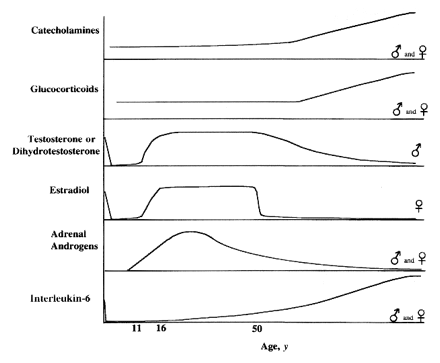
The concept of hormone replacement therapy is simple. HGH, DHEA, Thymosin, male and female sex hormones, and often Thyroxin will fall in concentration with age. To better approximate the physical condition of a younger person, you would theoretically want to replace hormones that tend to drop off in concentration dramatically with age. You would also want to see a drop in the pro-inflammatory and other harmful hormone levels that rise with age, at the same time.

It is not proven to work, other than anecdotally. But the idea deserves better experimental analysis than it has received so far, at least in the US.

Labels:

Thursday, January 18, 2007

Michio Kaku: BBC Special Report on Immortality


"This girl may live to be a thousand years old."

So begins Theoretical Physicist Michio Kaku,who is featured in this report on how time perception varies with age, and how that relates to the winding down of the human organism with time.

A fascinating inquiry into long life in nature, and the prospects for human longevity.

Sunday, January 07, 2007

Alcor Cryonics Video


This 28 minute video from Alcor looks at the history of life extension technology--specifically the cryonic approach to making "death" reversible indefinitely.

Labels:

Newer Posts Older Posts